
Rose Petal Rosaries: Authentic vs. Fake - Buying Tips
Rose Petal Rosaries: Authentic vs. Fake - Buying Tips
If you’re searching for a rosary that feels tender, meaningful, and rooted in Marian devotion, rose petal beads can be deeply moving. This guide, Rose Petal Rosaries: Authentic vs. Fake - Buying Tips, is here to help you shop with peace—so you can choose a rosary that’s truly well-made, reverent, and worthy of daily prayer.
At JerusalemFaith, many pieces are crafted with care in Jerusalem, and when it’s fitting, you may bring your rosary to be blessed at the Church of the Holy Sepulchre—a gentle reminder that our faith is not only believed, but lived.
Why this matters for Christians
A rosary is not jewelry first—it is a companion for prayer. It rests in your hands when words are few, when a family member is ill, when you’re discerning God’s will, or when you simply want to place your day into the Lord’s mercy. Because it becomes part of your spiritual rhythm, the quality and integrity of a rosary matter.
Rose petal beads carry a particular symbolism: roses have long been associated with Mary, and the Rosary itself has been described as a spiritual “garland.” While we never reduce faith to sentiment, the senses can still support devotion—touch, scent, and beauty can encourage perseverance in prayer.
Yet the market is full of mass-produced items that look “religious” but are made carelessly or described dishonestly. If you’ve ever wondered why one rose petal rosary costs more than another, or what “real rose petal beads” actually means, you’re not alone. That’s exactly why we created this guide: Rose Petal Rosaries: Authentic vs. Fake - Buying Tips for faithful, practical Christians who want clarity without cynicism.
Rose Petal Rosaries: Authentic vs. Fake - Buying Tips (A simple framework)
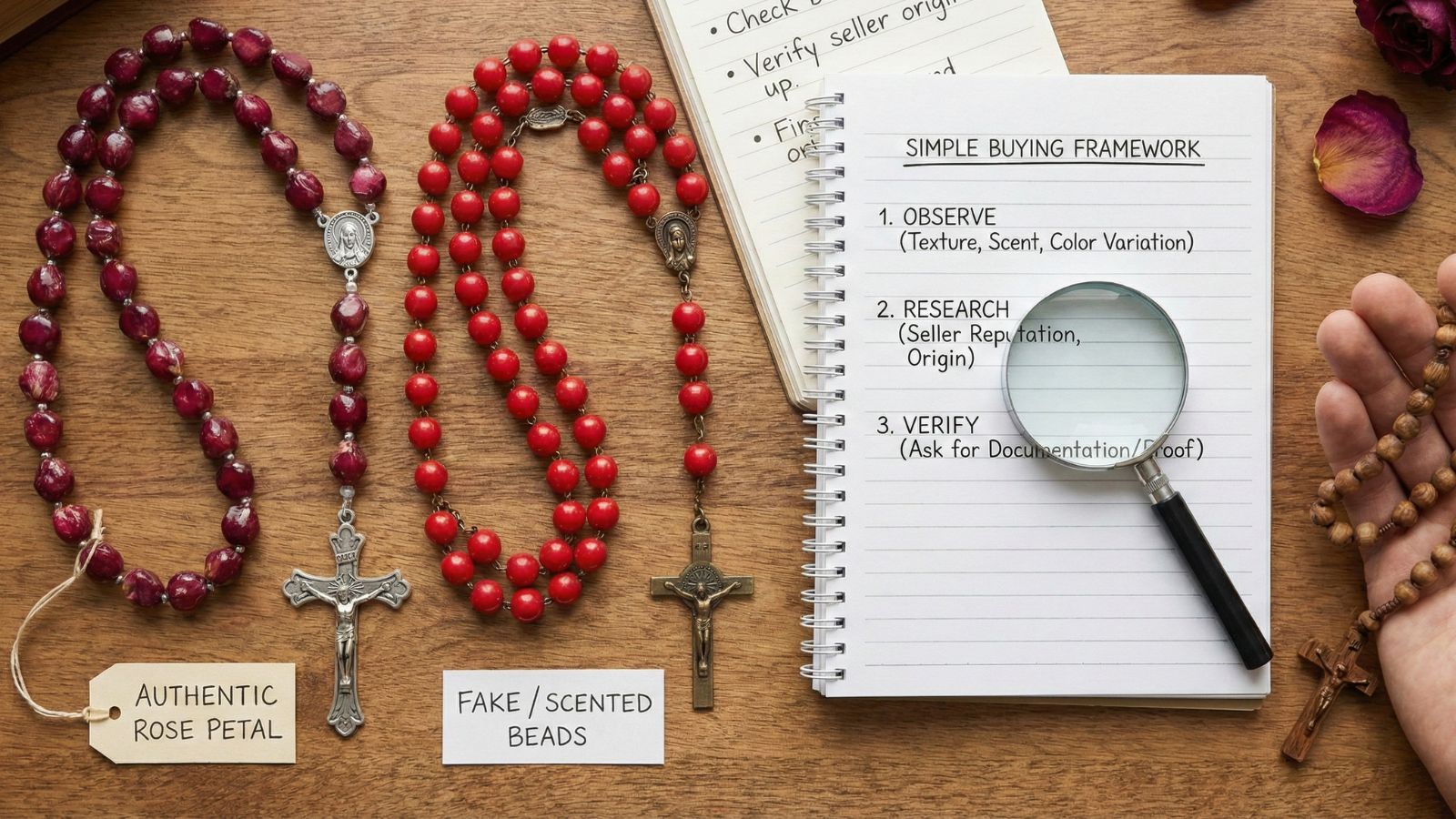
When you’re deciding what to buy, it helps to focus on a few trustworthy signals rather than one dramatic “proof.” Authenticity is usually a pattern—multiple small signs that agree with each other.
1) Start with provenance (who made it, where, and how)
- Clear maker story: reputable sellers explain materials, process, and where the rosary is assembled.
- Specific location details: “handcrafted in Jerusalem” should be supported with consistency, not vague claims.
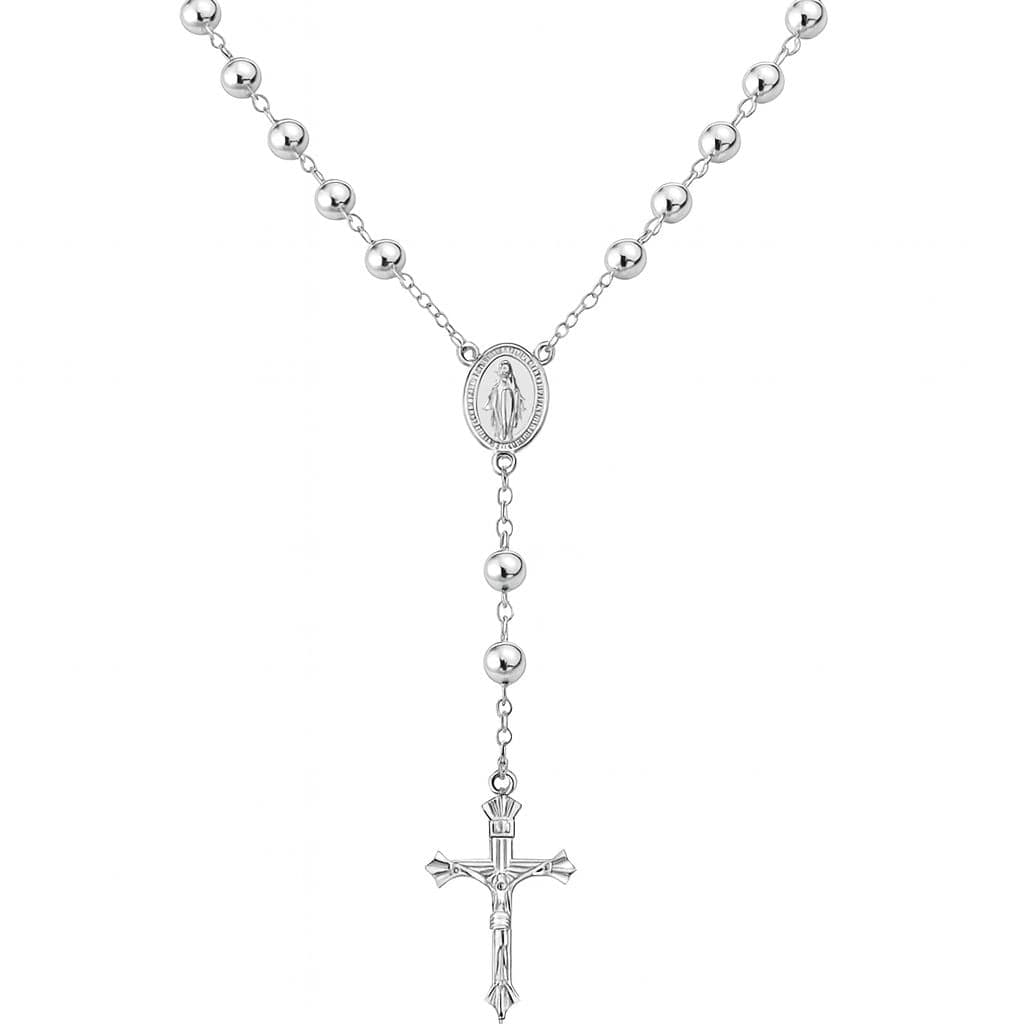
- Transparent product photos: close-ups of beads, the center medal, and the crucifix help you see workmanship.
2) Examine construction quality (because prayer is daily)
- Stringing or chain: strong cord, well-finished knots, or durable links are essential for long-term use.
- Bead consistency: well-made beads typically have consistent size and clean drilling (no jagged holes).
- Hardware integrity: center and crucifix connections should feel secure, not flimsy or easily bent.
3) Verify claims carefully (avoid “too good to be true” language)
- Be cautious with “100% pure rose petals” phrasing: rose petal beads usually require a binder/resin to hold shape.
- Don’t rely on scent alone: fragrance can be added to both authentic and imitation beads.
- Look for balanced descriptions: honest listings mention natural variation and realistic durability.
4) Choose for your real life (not only for a photo)
Will you pray with it daily? Carry it in a pocket? Keep it in a car? Gift it to a new Catholic? The best rosary for you is the one that supports faithful prayer in your actual routine—without fear of it falling apart.
For more options grounded in Holy Land craftsmanship, explore our Rosaries from Jerusalem collection, and if you’d like to know the heart behind our work, visit About JerusalemFaith.
Materials, finishes & comparisons (and where fakes hide)
“Rose petal rosary” can mean a few different things depending on the bead recipe and the craftsmanship. Understanding the common categories helps you spot exaggeration and avoid disappointment.
Authentic-style rose petal beads (pressed petals + binder)
Many traditional rose petal beads are formed from dried rose petals that are finely processed and mixed with a binding agent, then shaped, cured, and finished. Because petals are a natural material, you may notice:
- Subtle variation: slight differences in tone or texture from bead to bead.
- A “warm” feel: often less slick than cheap plastic, though finishes vary.
- Hand-finished details: cleaner edges and better drilling when made carefully.
Imitation beads (plastic/resin with color flecks or scent)
Some fakes are not “evil,” just misleading—mass-produced beads designed to look like rose petal material, sometimes scented to sell the illusion. Common signs include:
- Overly uniform appearance: identical patterning that looks printed or repeated.
- Very glossy surface: a toy-like shine and a slippery feel (not always, but common).
- Strong artificial perfume: a “spray” scent that doesn’t mellow naturally over time.
Quality markers that matter more than the “petal debate”
Even when beads include genuine rose petals, a rosary can still be poorly made. For Christians who want a rosary that endures, look for:
- Durable crucifix and center: balanced weight and solid attachment points.
- Comfortable bead size: beads that don’t dig into fingers during longer prayers.
- Reliable assembly: strong links or cord so the rosary withstands daily use.
Jerusalem craftsmanship often shows itself in the finishing: careful assembly, reverent design choices, and attention to details that are easy to overlook in photos—like smooth edges, sturdy connections, and a crucifix that feels worthy of the devotion it represents. Many Christians also value the option to have their rosary blessed at the Church of the Holy Sepulchre, linking prayer to a place where salvation history is remembered with awe.
Sizing, fit & usage scenarios
Most five-decade rosaries are long enough to drape in the hands comfortably, but there’s still meaningful variation in how they feel. Sizing is not vanity—it’s stewardship. A rosary that fits your prayer habits will be used more often.
Bead size: choose comfort for your hands
- Smaller beads: lighter, often easier to carry; can feel “fast” for some people while praying.
- Medium beads: a common balance for daily prayer and gifting.
- Larger beads: easier to grip, especially for those with larger hands or limited dexterity.
Usage scenarios (how you’ll actually live with it)
- Daily home prayer: prioritize comfort and durability over delicate styling.
- Travel or pocket carry: consider sturdier links/cord and a protective pouch.
- Bedside rosary: choose one that brings peace—many love rose petal beads for this gentle presence.
- Car rosary: be mindful of heat; prolonged high temperatures can stress certain materials.
- Parish group or RCIA: pick a rosary that invites questions and conversation, with solid construction.
If you’re pairing a rosary with another devotional item, our Crosses & Crucifixes collection can help you choose a complementary piece that remains reverent and timeless.
Care & stewardship tips
Caring for a rosary is a small act of reverence. Not because the object is “magic,” but because it supports holy habits—prayer, trust, and daily turning toward Christ.
Basic care (simple, gentle, effective)
- Keep it dry: store away from moisture; avoid leaving it in damp bags or bathrooms.
- Avoid harsh chemicals: perfumes, alcohol sprays, and strong cleaners can damage finishes.
- Use a soft cloth: wipe the crucifix and center gently to remove skin oils.
- Protect from heat: prolonged heat (like a car dashboard) can weaken certain binders or cords.
- Repair early: if a link loosens or cord frays, fix it promptly so the rosary doesn’t break during prayer.
A note about scent
Many people expect rose petal beads to smell strongly forever. In reality, scent often softens over time—especially if it’s natural. A fading fragrance does not automatically mean your rosary is fake. Let construction quality and honest provenance do the heavy lifting.
Gifting guidance (Confirmation, RCIA, illness, anniversaries, pilgrimages)
A rosary is one of the most personal Christian gifts because it says: “I’m praying with you.” Rose petal rosaries can be especially fitting when you want the gift to feel gentle, Marian, and full of hope.
Occasion-by-occasion suggestions
- Confirmation: choose durable construction and a classic crucifix—something that will last into adulthood.
- RCIA / entering the Church: include a short note encouraging daily prayer; consider a comfortable bead size.
- Illness or recovery: a rosary that’s easy to grip can support prayer when energy is low.
- Anniversary or wedding: consider elegant metalwork and a meaningful center medal.
- Pilgrimage remembrance: many love “Jerusalem-made” craftsmanship as a tangible memory of holy places.
Adding a blessing (a reverent tradition)
Many Christians treasure the tradition of having devotional items blessed. When relevant and possible, you may bring your rosary to be blessed at the Church of the Holy Sepulchre—a quiet way to entrust your prayers to God in a place saturated with Christian history. Even if a blessing happens later at your local parish, the intention is the same: to dedicate your prayer life more fully to the Lord.
Common mistakes & how to avoid them
Let’s name the most common shopping pitfalls—so you can avoid regret and buy with confidence.
Mistake 1: Treating scent as the “authenticity test”
Scent can be natural, added, or absent. It’s not a reliable proof. Instead, focus on workmanship, provenance, and honest descriptions.
Mistake 2: Ignoring the weak points (links, connectors, cord)
Beads rarely fail first—connections do. Look closely at the center, crucifix connection, and how the decades are joined.
Mistake 3: Choosing only for looks, not for prayer
A rosary that hurts your fingers or feels fragile often ends up in a drawer. Choose the one you’ll actually pray with.
Mistake 4: Falling for vague “Holy Land” marketing
“Holy Land” language can be used loosely. Prefer sellers who clearly explain what is made in Jerusalem, what is sourced, and how items are assembled with care.
Mistake 5: Buying too fast during emotional moments
Gifts for illness or grief are tender decisions. Take a breath, read details, and choose something sturdy and reverent—your future self will be grateful.
Mini-FAQ
- Do authentic rose petal rosaries always smell like roses?
- Not always. Natural scent can be subtle and may fade over time. Strong, lasting perfume can also be artificially added—so don’t use scent as the main test.
- Are “fake” rose petal rosaries useless for prayer?
- A rosary can still be used for prayer, but misleading descriptions and poor construction can cause disappointment. It’s worth seeking honest materials and durable craftsmanship.
- What’s the most important sign of quality?
- Construction: secure connections, durable links/cord, clean drilling, and a well-finished crucifix and center medal.
- Can I bring my rosary to be blessed at the Church of the Holy Sepulchre?
- When relevant and possible, many pilgrims do. You can also have your rosary blessed by your local priest—both are beautiful traditions that dedicate your devotional item to God.
- Is a higher price always proof of authenticity?
- No. Price can reflect craftsmanship, materials, and assembly time—but it can also reflect marketing. Use the framework: provenance, construction, and honest descriptions.
- What if I’m buying a rosary as a gift and I’m unsure about bead size?
- Medium-sized beads are often the safest choice for most people. If the recipient has dexterity challenges, consider larger, easier-to-grip beads.
Conclusion & gentle next step
Buying a rosary should not feel like a stressful guessing game. With a calm, faithful approach—provenance, workmanship, and realistic expectations—you can choose a rosary that supports prayer for years.
Keep this guide close whenever you shop: Rose Petal Rosaries: Authentic vs. Fake - Buying Tips is ultimately about protecting something simple and holy—your daily return to Christ through prayer, step by step, bead by bead.
If you’re ready to choose a piece made with reverence, explore our Rosaries from Jerusalem. And if you’d like to understand our mission and craftsmanship more deeply, visit About JerusalemFaith. Wherever you are in the world, may your prayer be steady, your heart be comforted, and your home be filled with peace.